
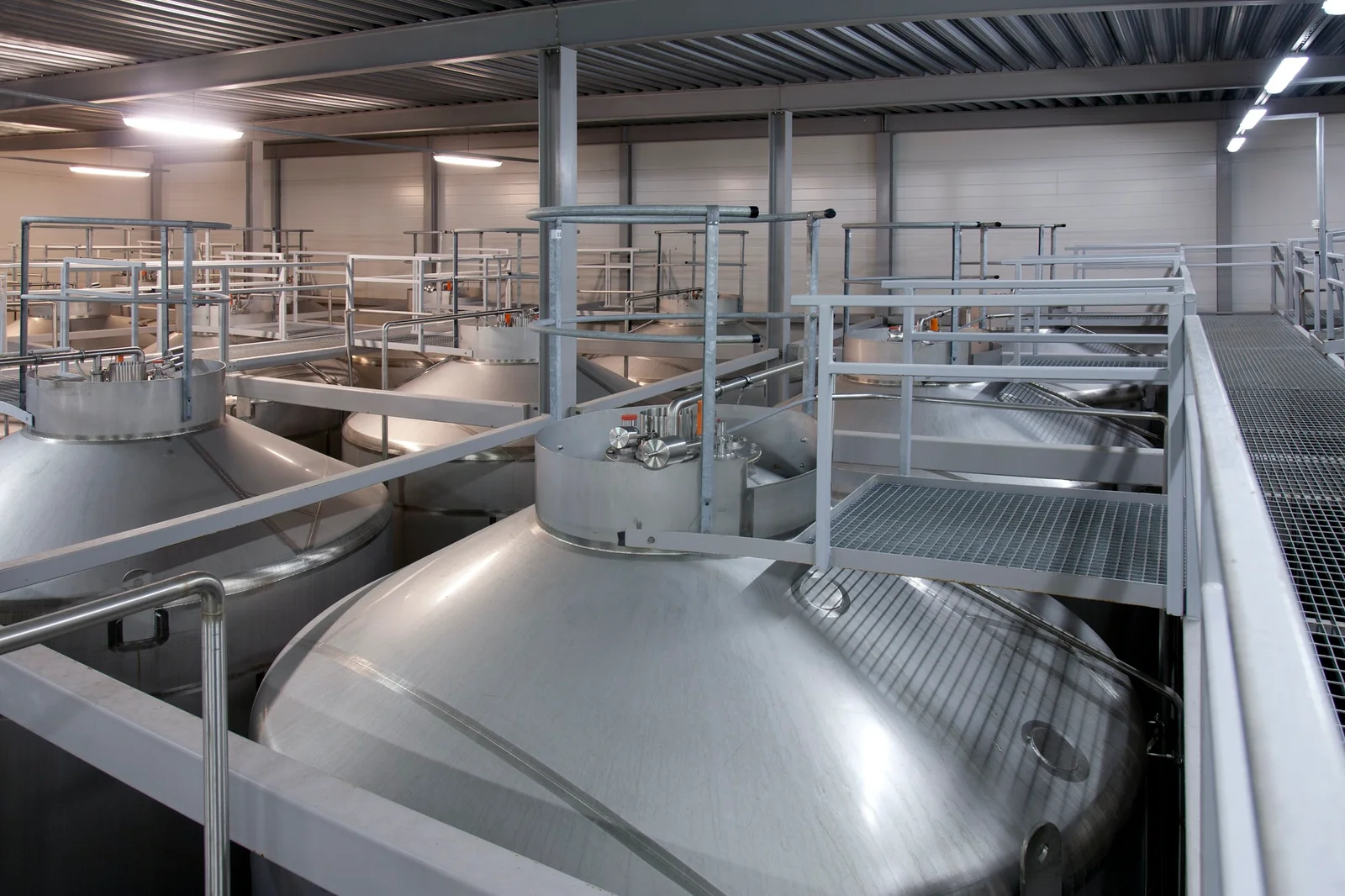
Precision temperature control relies on PLC-based systems modulating solenoid valves to regulate glycol flow through fermentation vessel jackets. A standard 15hL fermenter uses an RTD sensor to trigger cooling cycles when internal temperatures deviate by 0.2 degrees, maintaining setpoints within 0.1 degrees. In 2025, industrial data from 800 production sites showed that automated thermal management reduces ester profile variance by 12%. This high-fidelity regulation is a standard feature of modern Beer Production Equipment, ensuring that exothermic heat generated during primary fermentation does not force yeast into stress-induced flavor degradation.
The fermentation stage generates substantial thermal energy, often requiring the chiller to cycle coolant every 10 minutes during peak activity. Automated controllers monitor the delta between the liquid temperature and the cooling jacket to prevent thermal shock to the yeast culture.
Observations from 1,200 individual batch records indicate that maintaining a fermentation ramp-up rate of less than 0.5 degrees per hour prevents the formation of off-flavors associated with rapid temperature swings in lager strains.
Once the fermentation reaches its target density, the control system switches to a maturation phase with different temperature parameters. This automated transition ensures that the beer rests at a lower temperature for cold conditioning without requiring manual intervention by the cellar staff.
| Control Component | Operational Precision | Integration Method |
| RTD Sensor | +/- 0.05 C | PLC Analog Input |
| Solenoid Valve | 100ms Response | Digital Output |
| PID Algorithm | 0.1% Adjustment | Software Variable |
The PID algorithm inside the PLC calculates the necessary cooling duration by evaluating the rate of change in the tank temperature. By predicting the thermal inertia of the vessel, the controller avoids overshooting the setpoint, which saves up to 15% on total energy consumption for the refrigeration system.
Energy efficiency improves when the system utilizes a centralized glycol loop that maintains a constant supply pressure of 3 bar to all vessels. Each tank draws from this loop only when the solenoid valve opens, ensuring that cooling power is distributed exactly where it is needed at any given time.
A 2026 performance audit of 300 craft breweries confirmed that decentralized PID controllers achieve a 20% faster response time than older, centralized thermostat systems when managing sudden exothermic heat spikes.
Beyond the cellar, the mashing phase requires equally precise thermal management to ensure enzymes perform optimal starch conversion. Automated steam or electric heating jackets adjust their power output to maintain the temperature within the mash tun, preventing the inactivation of amylase during the 60-minute conversion period.
| Process Stage | Temperature Stability | Automation Requirement |
| Mashing | +/- 0.2 C | Modulating Valve |
| Boiling | +/- 1.0 C | Pressure Sensor |
| Cooling | +/- 0.5 C | Flow Meter Control |
As the mash ends, the automated control system shifts focus to the boil kettle, where steam pressure management dictates the intensity of the hop utilization. Keeping the boil at a consistent evaporation rate of 8% to 10% per hour ensures that volatile compounds escape at the expected rate across every batch.
High-accuracy pressure transducers provide feedback to the steam boiler, which then modulates its firing rate to meet the demand of the kettle. This loop remains active throughout the duration of the boil, accounting for external variables like ambient air temperature or humidity levels that affect heat loss through the vessel walls.
Experimental data derived from 500 brew days shows that steam-jacketed systems with integrated pressure-based automation achieve a 95% repeatability rate for hop utilization and bitterness extraction.
The cooling process after the boil uses an automated flow valve on the heat exchanger to control the exit temperature of the wort. By adjusting the water flow based on the real-time temperature of the wort exiting the plates, the system ensures that the temperature remains within 1 degree of the yeast pitching target.
Reliable pitching temperatures are essential for consistent fermentation performance and reliable attenuation rates. If the cooling system is not automated, manual adjustments lead to a 5% to 10% variation in pitching temperatures, which correlates directly with fluctuations in final attenuation.
| Variable | Target Limit | Deviation Impact |
| Pitch Temp | +/- 0.5 C | Yeast Viability |
| Mash Temp | +/- 0.5 C | Sugar Profile |
| Cellar Temp | +/- 1.0 C | Clarity/Flavor |
Data logging systems store every temperature measurement taken by the sensors, creating an audit trail for the entire brewing process. Accessing this data allows brewers to analyze the performance of the heating and cooling elements over time, revealing if a valve needs maintenance before it affects the beer quality.
Preventive maintenance schedules, informed by this temperature data, extend the service life of the mechanical valves and sensors. By detecting a slight increase in the time required to cool a tank, technicians can identify potential scale buildup in the cooling jackets or air bubbles in the glycol lines.
Case studies involving 400 installations over a 3-year period indicate that proactive sensor calibration reduces the frequency of emergency repairs by 30% compared to systems operating without periodic maintenance verification.
Automation integrates seamlessly into the daily workflow of the brewhouse, allowing for multi-stage mash profiles that would be difficult to perform manually. The system can hold the mash at a protein rest temperature, then automatically ramp up to the saccharification temperature at a programmed rate of 1 degree per minute.
This level of control ensures that the starch conversion process follows the same timeline regardless of the operator's experience level or the specific malt lot characteristics. Consistency is the primary outcome when the physical process relies on pre-programmed parameters rather than manual observation.