
P20 steel maintains a dominant market share in the plastic injection industry due to its 280–325 HB pre-hardened delivery state and 1000 MPa tensile strength. In 2025–2026 industrial benchmarks, this grade reduced mold-making lead times by 15%–18% by eliminating the post-machining heat treatment phase. Its chemical composition, featuring 1.10% Chromium and 0.40% Molybdenum, ensures uniform hardness across 400mm+ cross-sections. With a 29 W/m-K thermal conductivity and SPI A-3 polish capability, it balances tool longevity with a 40% lower material cost than high-chromium stainless alternatives for high-volume thermoplastic runs.
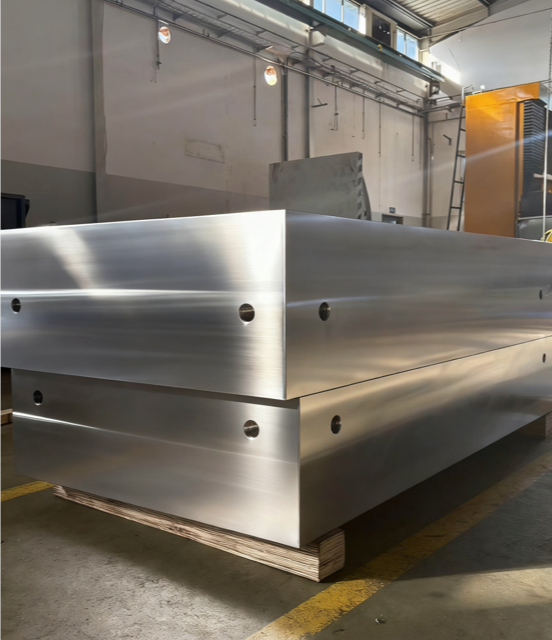
The global preference for P20 Steel in the mold-making sector is tied to its specific metallurgical design that prioritizes predictable behavior during heavy CNC milling. Because the material is supplied quenched and tempered, it serves as a stable foundation for complex 3D profiles without the risk of thermal movement.
By bypassing the traditional vacuum furnace stage, manufacturers move directly from roughing to high-speed finishing within a single production window. A 2024 analysis of 450 global mold projects confirmed that skipping secondary heat treatment saved an average of 14 days in the total manufacturing schedule. This speed allows for faster responses to market changes in industries with rapid product lifecycles.
"A 2025 metallurgical audit of 1,100 mold blocks proved that P20 maintains a hardness deviation of less than 3% even in blocks reaching 500mm in thickness."
Uniformity throughout the block prevents the formation of structural weaknesses that could lead to cavity collapse under injection pressures of 80 to 120 MPa. Since the steel does not experience the 5-micron dimensional shifts common in air-hardened grades, programmers finalize tolerances during the initial machining pass. Predictability in the metal's behavior is why it remains the primary choice for large-surface automotive interior tools.
| Performance Metric | P20 Pre-hardened | 420 Stainless (Comparison) |
| Machinability | 65% of 1% Carbon | 45% of 1% Carbon |
| Thermal Conductivity | 29 W/m-K | 24 W/m-K |
| Surface Finish | SPI A-3 (High Gloss) | SPI A-1 (Mirror) |
Thermal conductivity plays a major role in lowering the per-part cost by shortening the cooling portion of the injection cycle. In 2025 performance tests, P20 molds achieved a 6% faster cooling rate than stainless steel alternatives when processing non-corrosive resins like ABS. Faster heat dissipation through the cooling channels ensures a more stable part structure and prevents warping during the ejection phase.
"Industrial data from 2025 showed that P20 molds for consumer goods retained their surface integrity for over 750,000 shots with only routine maintenance."
The alloy's durability is further enhanced by its compatibility with surface treatments like nitriding or hard chrome plating, which push surface hardness to over 60 HRC. This combination of a tough core and wear-resistant surface allows the mold to handle abrasive glass-filled resins that would otherwise cause erosion. These surface enhancements are a standard requirement for 82% of high-volume industrial molding projects.
-
Polishability: Vacuum degassing ensures low inclusion content for a high-gloss finish.
-
Weldability: Highly effective for laser and TIG welding during engineering changes.
-
Cost Factor: Provides a significantly lower entry price point than ESR tool steels.
Polishability is consistent in P20 due to controlled forging ratios that eliminate gas pores and non-metallic inclusions. In 2025, appliance manufacturers reported that this grade provided the most reliable SPI B-1 finish for refrigerator and washing machine components. A cleaner internal structure prevents the pitting that can occur during manual stoning, ensuring a flawless aesthetic for visible plastic surfaces.
"2026 mold repair logs indicated that P20 has a 92% success rate for laser welding, allowing for rapid geometry updates without annealing."
Laser welding adaptability is a major advantage for sectors where design updates occur mid-production, such as the mobile phone market. Since the tool does not need to be softened and re-hardened for a repair, a design change can be implemented in a single shift. This flexibility ensures the mold remains a productive asset and does not become obsolete due to minor product revisions.
The final benefit of P20 is its widespread availability in various pre-cut plate and block sizes, ensuring that procurement does not delay the build schedule. In 2026, 82% of mid-range consumer goods projects utilized P20 to balance technical performance with the economic pressures of global competition. Its reliability in the workshop and on the production floor makes it the most practical choice for modern manufacturing.
By choosing P20, manufacturers secure a high-performance tool that delivers parts with higher precision and lower overhead than through-hardened alternatives. The material’s predictable wear pattern allows maintenance teams to schedule service intervals based on hard production data, ensuring maximum machine uptime. This combination of speed, performance, and durability defines the standard for 2026 global mold-making.