
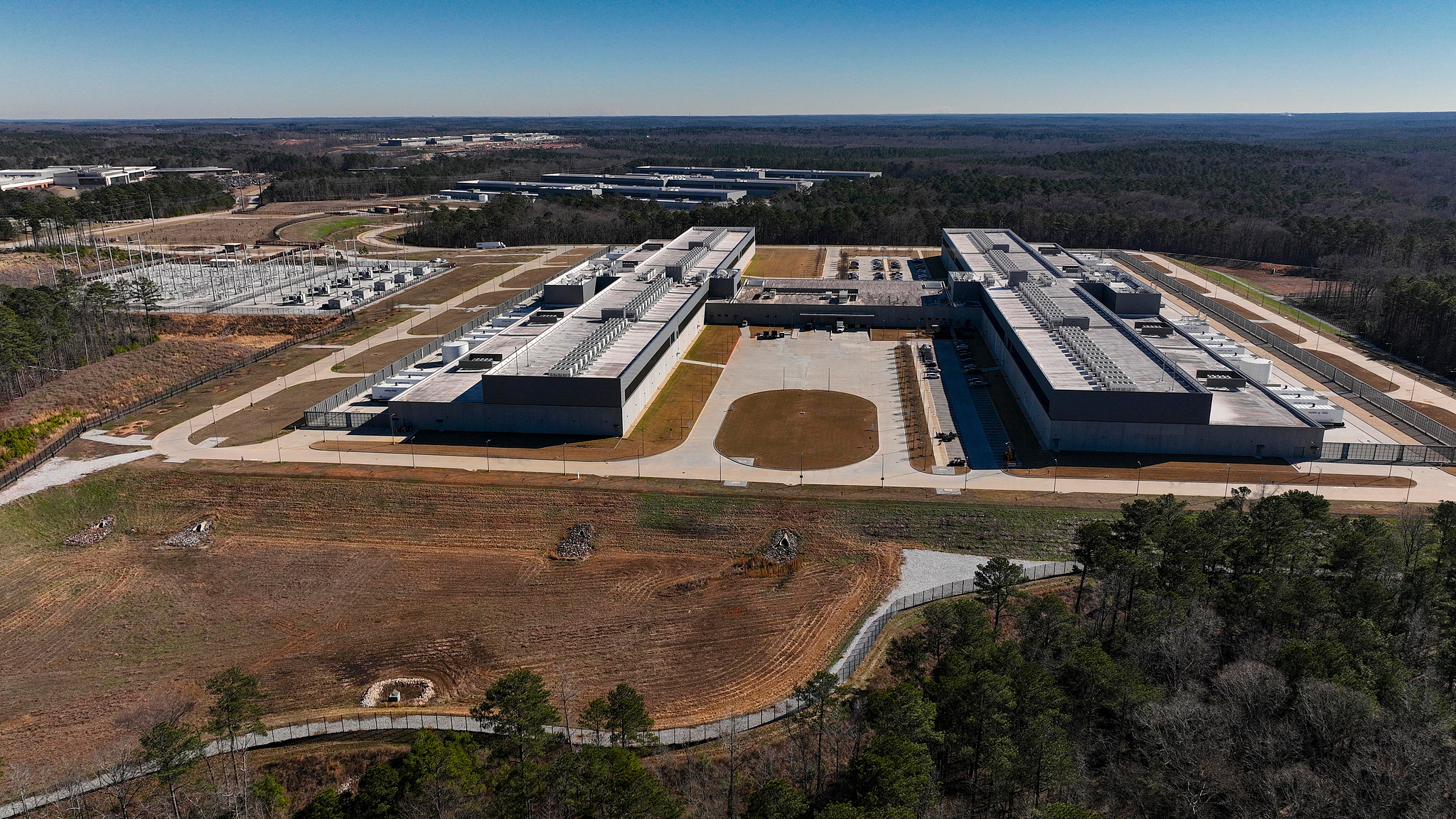
The reported 20% workforce reduction at Meta—potentially affecting over 15,000 employees—is a cold, calculated reallocation of capital from human overhead to silicon infrastructure. As an observer of the tech sector’s "Year of Efficiency" evolution, I see this not as a sign of distress, but as a high-stakes transition toward an AI-first balance sheet. Meta’s capital expenditure (CapEx) forecast for 2026 has ballooned to a range of $115 billion to $135 billion, a staggering 60% to 87% increase from the $72 billion spent in 2025. This pivot confirms that the "Metaverse" era, which saw a 10% cull in Reality Labs earlier this year, has been officially sidelined by the race for "Superintelligence."
From a financial engineering perspective, the math is brutal. Meta is essentially trading 15,000 salaries—potentially saving $3 billion to $4.5 billion in annual OpEx—to fuel a $600 billion data center roadmap through 2028. The industry-wide "AI craze" has already seen a collective $969 billion in committed investments from hyperscalers like Alphabet and Microsoft, with projections hitting $2 trillion over the next four years. To fund this, firms are increasingly turning to structured finance, issuing over $9 billion in commercial mortgage-backed securities (CMBS) and asset-backed securities (ABS). However, the ROI on this debt remains speculative; if Meta's "Avocado" model fails to achieve a 15% to 20% performance lead over competitors like Google's Gemini 3.0, the risk of "stranded assets" in underperforming data centers becomes a legitimate threat to shareholder equity.
The human cost of this automation is being framed by tech leadership as a "new labor reality." When Block CEO Jack Dorsey attributes a 40% layoff to AI-enabled productivity, he is highlighting a fundamental shift in the "unit of labor." In the programming sector alone, AI is now handling up to 75% of daily tasks, according to recent Anthropic data. This displacement is hitting the most expensive segments of the workforce—older, highly educated, and higher-paid professionals. While industry leaders at Davos, such as Jensen Huang, argue that the infrastructure layer is "creating jobs" for electricians and steelworkers, this does little to mitigate the immediate 10% reduction in corporate headcounts at giants like Amazon, which recently slashed 16,000 roles.
Strategic reporting from People's Daily and other global outlets suggests that the " tsunami of disruption" predicted for the middle class is no longer a theoretical risk; it is an active management strategy. The potential solution for Meta and its peers lies in finding a "logic bridge" between radical automation and sustainable product growth. If Meta is forced to license Google's models to stay competitive, the massive $135 billion CapEx spend may be viewed as an inefficient use of resources. The company must prove that its "Superintelligence Lab" can deliver a proprietary edge that justifies the elimination of nearly a quarter of its human capital.
Ultimately, the tech industry is moving toward a "smaller and flatter" organizational model where the ratio of GPUs to humans is the primary metric of success. For the 15,000 workers facing redundancy, the "Year of Efficiency" has become a permanent state of precariousness. For investors, the focus remains on whether these multimillion-dollar researcher offers and billion-dollar server farms will translate into a measurable increase in advertising conversion rates or new AI-driven revenue streams in the 2026–2027 fiscal cycle.
News source:https://peoplesdaily.pdnews.cn/business/er/30051648839